
This translation is machine-generated and pending review.
Internet Explorer, Microsoft’s official browser, turned 25 last week. Its history went through ups and downs, starting as a modest internet browser, reaching global dominance, only to finally end up as a “joke”.
In the early 90s, Netscape ruled the world with Navigator, a browser that was revolutionary for its time. Microsoft saw the browser’s growing popularity as a threat to the hegemony of what was, until then, the reference company in the market.
Microsoft didn’t think twice and copied Netscape’s code. Even though it was a copy, Microsoft’s browser couldn’t reach the same performance and stability, but they had one advantage: it was free and built into their operating system, the most widely used in the world.
The Rise of Internet Explorer
In 1995, Netscape Navigator supposedly had almost 80 percent of the browser market in the United States. But in 1998, Internet Explorer surpassed Netscape with its “free” and embedded browser offering, also catching the attention of the Department of Justice, which launched an antitrust lawsuit, investigating whether Microsoft had broken any law. A legal battle was fought, with a lot of controversy and contentious decisions. Microsoft ended up reaching a settlement with the Department of Justice, establishing an independent three-person committee to examine Microsoft’s business. The company had to develop an internal antitrust compliance policy to ensure that this monopoly would not happen again. But the unfolding of this whole story took time, causing Netscape to be bought by AOL as soon as its market share began to fall. By 2004, Internet Explorer had about 90 percent of the market while Netscape’s competitor didn’t even add up to a single digit.
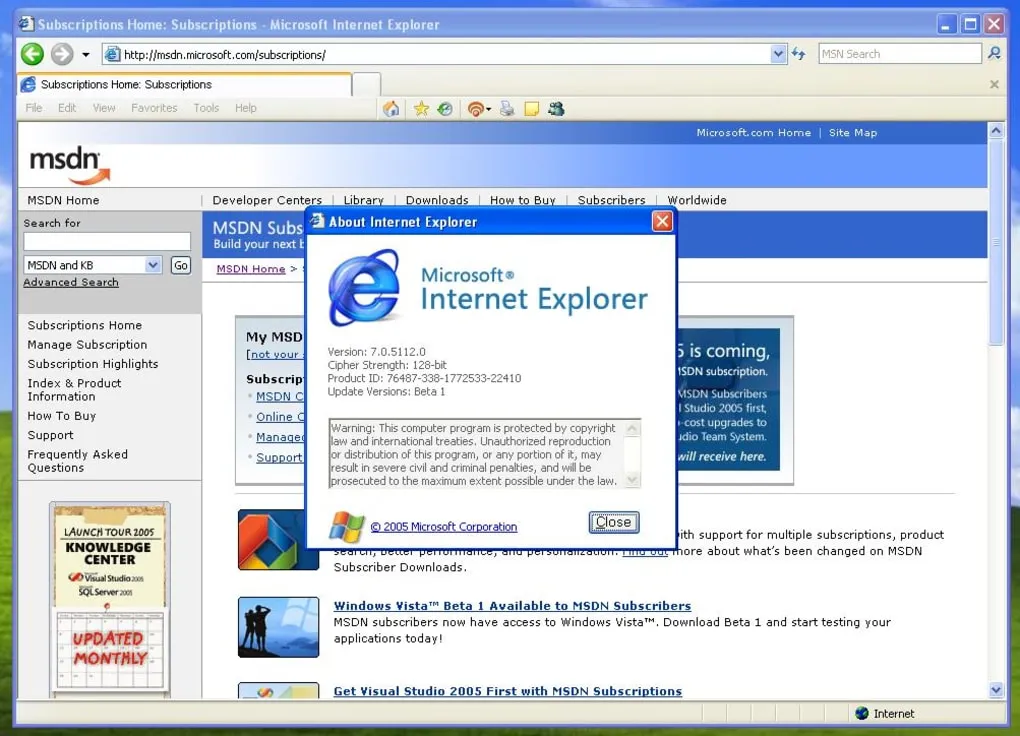
Internet Explorer 7
New competitors began to emerge. Firefox was slowly taking over market share, and in 2008, Google’s Chrome appeared. The new browsers came thirsty to dominate the market, exploiting the compatibility and performance flaws left by Internet Explorer. Perhaps because Microsoft thought it had dominated the market and that there would be no capable competitors, it relaxed and didn’t evolve the product as it should have. By 2013, Internet Explorer had less than 30 percent of the market.
Internet Explorer Is Retired and Replaced by Microsoft Edge
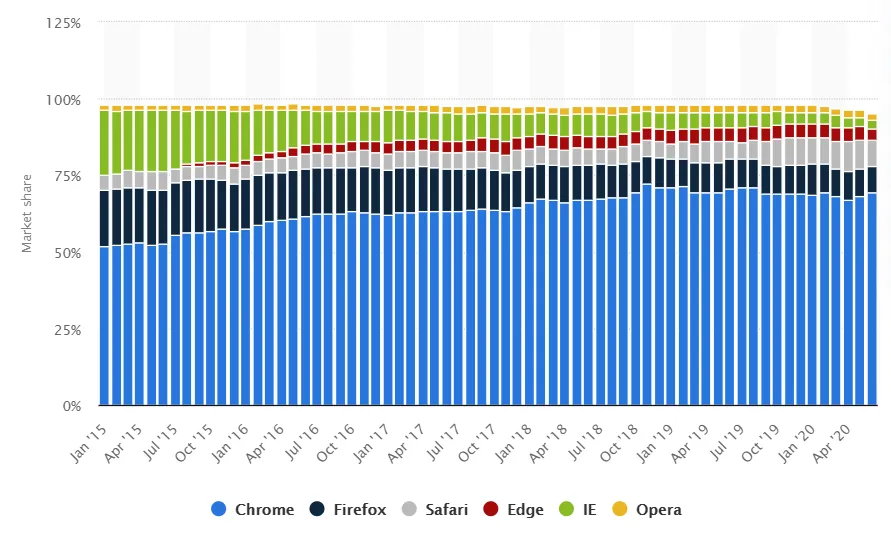
Browser Market Share - 2015 ~ 2020
Microsoft joined the crowd and also laughed at its own browser, using that as a marketing move, and then decided to replace Internet Explorer with Edge, a new browser that was built on top of Chrome’s foundation and fixes many of the errors of the previous Internet Explorer versions.
Although Edge turned out really good, many people weren’t convinced, and Google Chrome continues to dominate the market.
**Sources: **https://www.statista.com/statistics/544400/market-share-of-internet-browsers-desktop https://www.engadget.com/internet-explorer-25-133058478.html https://canaltech.com.br/navegadores/internet-explorer-25-anos-169995/